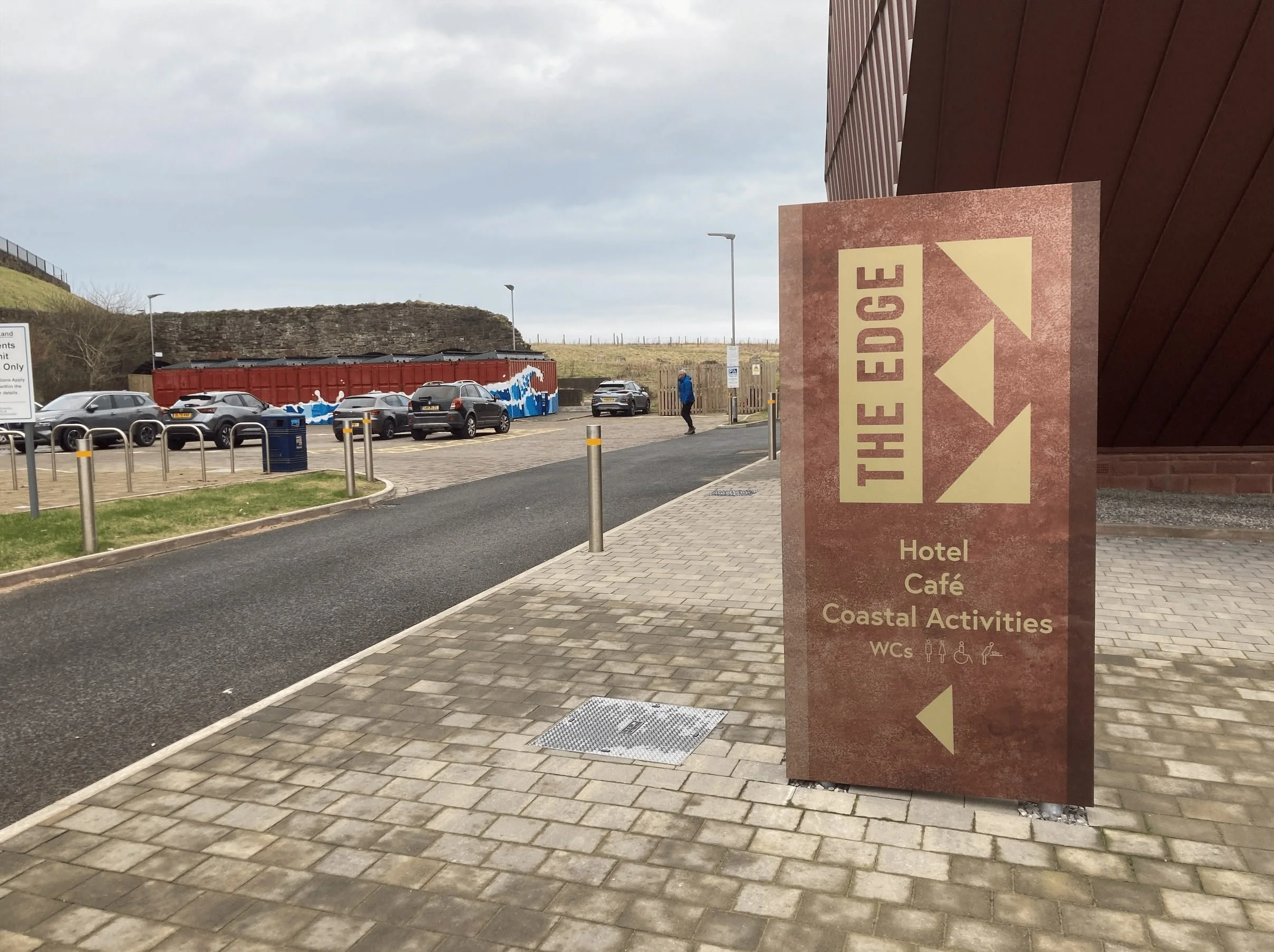
Project Title:
‘Cultural Regeneration, Economic Diversification and Governance’.
Researchers:
John Scanlan & Natasha Dawson, School of Art and Media.
This research project will examine the structures, dynamics and processes through which place-based cultural initiatives succeed or fail in meeting cultural policy objectives, which we define as nurturing the human capacities that allow people to flourish. It will explore this question within the contexts of:
attempts to stimulate diversification in the economy of West Cumbria that led to a range of cultural regeneration initiatives between the 1990s and the present, and;
the impact of local government re-organisation on the governance of place and culture following the creation of the new unitary authority of Cumberland Council in 2023, which absorbed the former West Cumbria boroughs of Allerdale and Copeland.
By bringing together insights from cultural sociology, history, policy studies, and urban geography, the research seeks to understand what constitutes place governance in Cumberland today.
Through interviews, archival research, workshops and cultural policy analysis, it will also inquire into the part played by a wide variety of cultural actors and stakeholders, policy makers and local government officials, and situate their experience within the broader contexts within which they are able to act. We want to find out what it takes to make West Cumbria and Cumberland prosperous, healthy and vibrant places.
While the project aims to address the question of contemporary governance, it is important to indicate that the critical point in shaping the present – as far as the focus on place and culture in West Cumbria is concerned – lies in the recent past.
As part of our research into the nature of the partnerships that characterise the cultural sector today, we discovered the extent to which a large number of rather different kinds of partnership emerged during regeneration initiatives in the 1990s. These, it seemed clear, were formed by the unique circumstances of the time and aimed at creating greater economic diversification in West Cumbria in the wake of potentially catastrophic cancellation of THORP (the Thermal Oxide Reprocessing Plant, which promised thousands of jobs) at Sellafield.
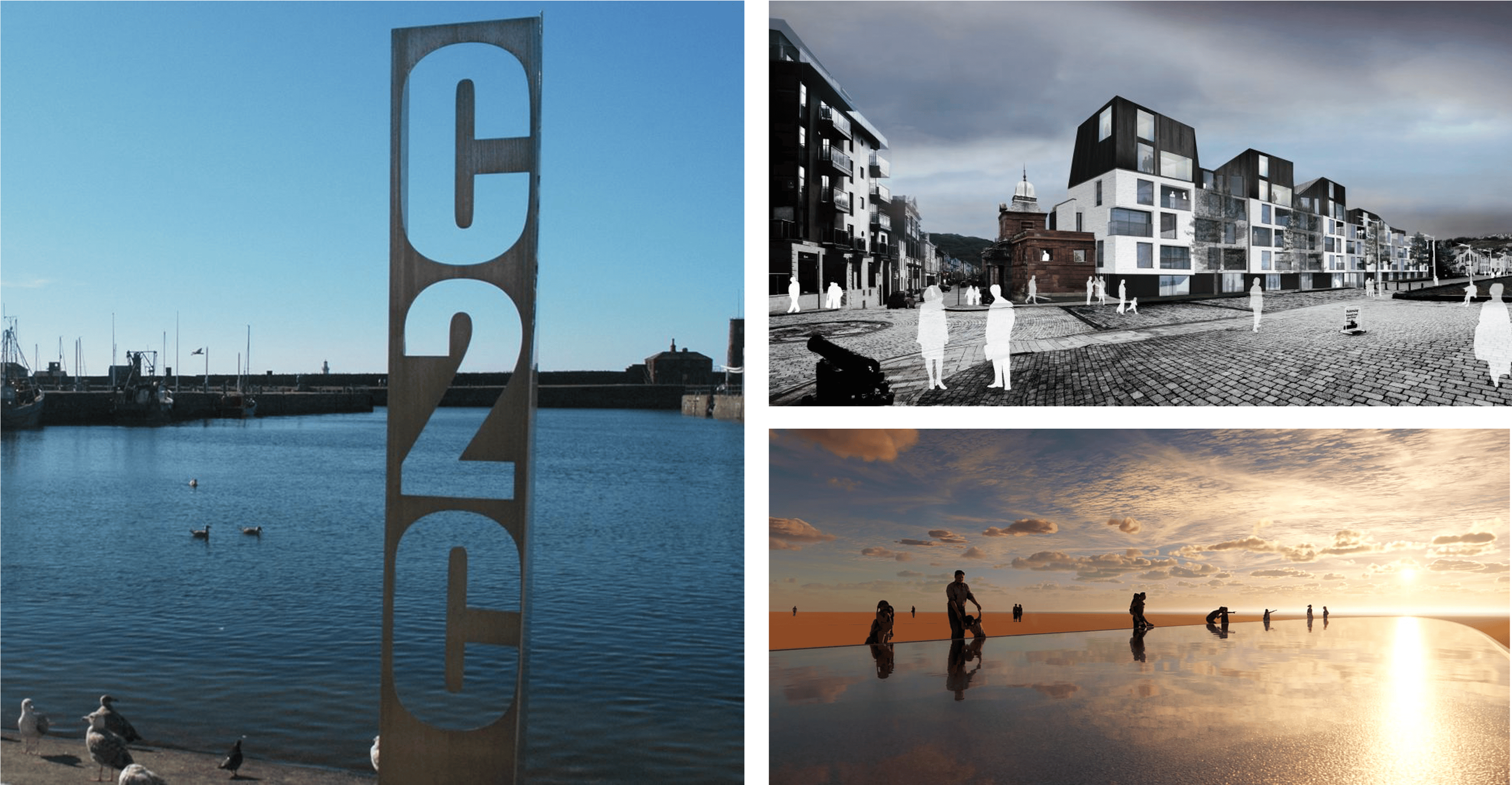
In addtion to the C2C cycle route, other major regeneration initiatives include ‘Deep Time’, a major public art project developed by Copeland Borough Council and Sellafield to create new cultural tourism (bottom right) and the Whitehaven RIBA contest to develop new housing on Whitehaven harbour (top right), a project of the West Lakes Renaissance partnership. It attracted hundreds of entries from around the world, but none were realised.
This prospect laid bare the extent of the region’s economic dependence on a single dominant industry. In the decades since this critical point, there have been many cultural regeneration initiatives that sought to re-orient the economy of the region away from its dependency on the nuclear industry. Often, these initiatives took the form of ‘re-imagining’ West Cumbria as a visitor destination. Some of these initiatives delivered benefits to the public (including, for instance, the C2C cycleway, a project undertaken with a wide range of partners), while others received much publicity and promised great things but failed to deliver.
We want to understand the extent to which such initiatives, continuing into the present, alongside other factors such as local government re-organisation, have managed to shift the balance of influence with respect to the governance of West Cumbrian society away from its main economic player, and what lessons can be taken from past experience.
Project Duration:
3 years (2026-29)
Funder:
Westlakes Research Ltd